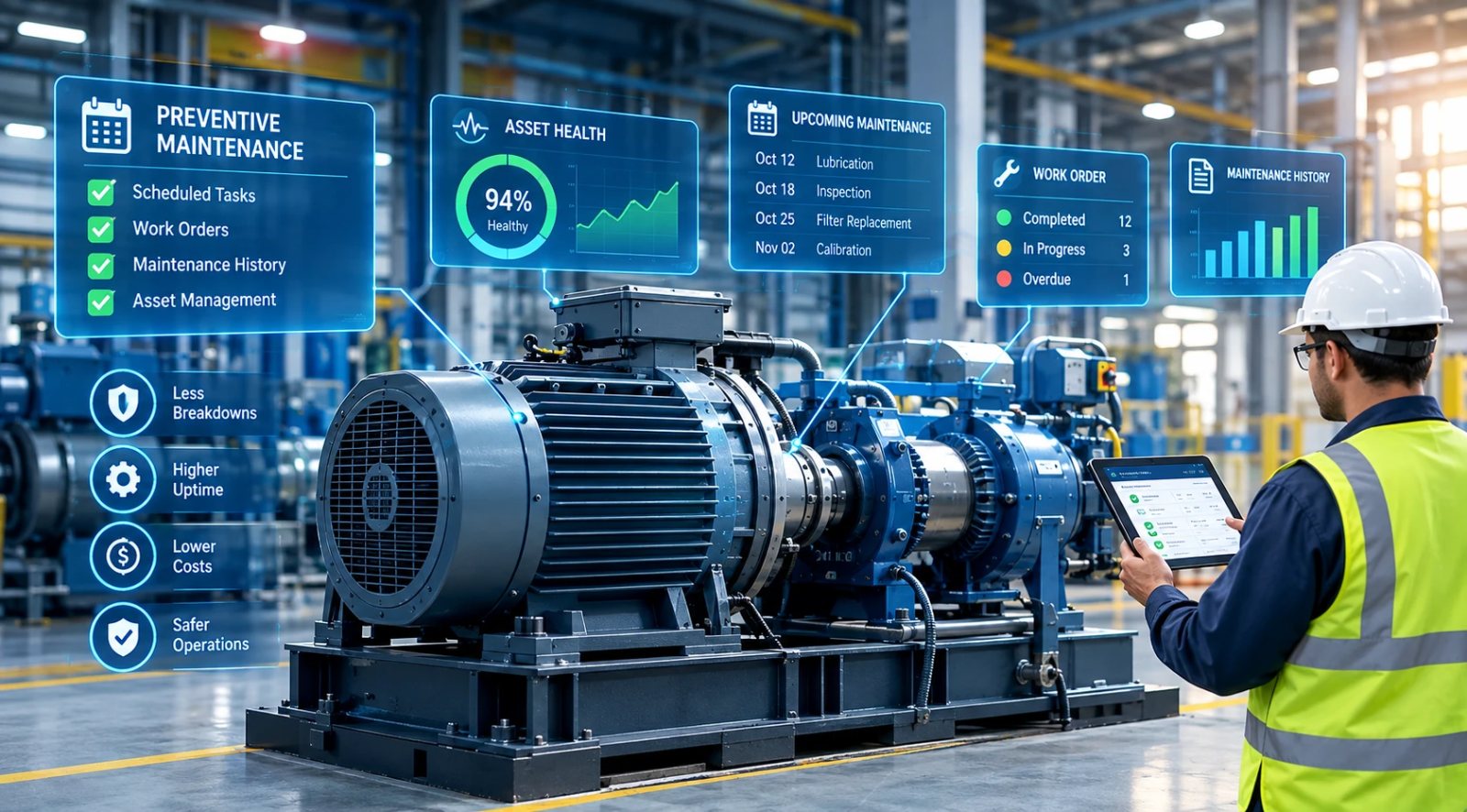
Preventive maintenance sounds simple: service equipment before it fails. In real plants, keeping every task, machine, technician, and spare part on schedule is much harder.
Plant managers often deal with missed jobs, incomplete records, manpower shortages, and changing production priorities. Industrial preventive maintenance software helps bring these activities into one system, making maintenance easier to plan, track, and improve.
Why Preventive Maintenance Becomes Difficult as Plants Grow
Preventive maintenance gets harder when the number of machines, tasks, and people involved increases.
A small plant may manage with spreadsheets and manual reminders. As operations grow, the same approach can lead to missed tasks, unclear responsibilities, and poor visibility.
The right maintenance software connects asset records, schedules, work orders, checklists, and technician updates in one place.
7 Preventive Maintenance Challenges and How Software Helps
1. Missing Scheduled Maintenance Tasks
One of the most common preventive maintenance challenges is simply missing a job.
A task may be forgotten because of production pressure, staff absence, or poor follow-up. Even a missed inspection can later lead to an avoidable breakdown.
Software can create recurring work orders and alert teams when maintenance is due. Managers can also see overdue jobs without checking multiple files.
2. Managing Too Many Maintenance Schedules
Different machines need different maintenance frequencies. Some require weekly checks, while others need service every month or after a fixed number of running hours.
Managing this manually becomes difficult as asset numbers increase.
A digital preventive maintenance schedule keeps these intervals organised. The software can trigger jobs based on time, meter readings, or predefined usage limits.
3. Inconsistent Maintenance Checklists
Two technicians may inspect the same machine differently if there is no standard process.
This can lead to missed inspection points or incomplete information.
A digital preventive maintenance checklist gives technicians the same step-by-step instructions for each job. It can include safety checks, measurements, photos, and technician remarks.
4. Poor Visibility Into Maintenance History
When records are stored in notebooks, emails, or separate spreadsheets, finding an asset's full maintenance history can take time.
Industrial preventive maintenance software keeps previous work orders, inspections, failures, repairs, and technician notes linked to the asset.
Managers can quickly review what happened before deciding the next action. This is especially useful when the same machine develops recurring problems.
5. Balancing Maintenance With Production Priorities
Maintenance teams may know a machine needs attention, while production teams may not want to stop it.
Software cannot remove this conflict, but it can improve planning.
Managers can see upcoming maintenance early and coordinate work during planned shutdowns, changeovers, or lower-production periods.
A visible preventive maintenance schedule gives both teams more time to prepare and reduces last-minute discussions.
6. Limited Manpower and Technician Availability
Many plants have more maintenance work than available technicians.
Without clear priorities, critical jobs may be delayed.
Maintenance software can help managers assign work based on asset criticality, technician availability, and due dates.
Teams can see what needs attention first instead of relying only on verbal instructions or individual follow-ups.
7. Difficulty Measuring Maintenance Performance
Completing maintenance tasks does not automatically mean the program is effective.
Plant managers need to know whether preventive work is actually reducing breakdowns and improving reliability.
Useful measures include:
- PM compliance
- Overdue work orders
- Unplanned downtime
- Repeat failures
- Mean time between failures
- Planned versus unplanned maintenance
Tracking these numbers helps managers understand whether maintenance activities are delivering real results.
How Maintenance Software Improves Daily Maintenance Work
The main value of industrial preventive maintenance software is better visibility.
Instead of managing maintenance through separate spreadsheets, notebooks, emails, and reminders, teams can work from one structured system.
It can help plant managers:
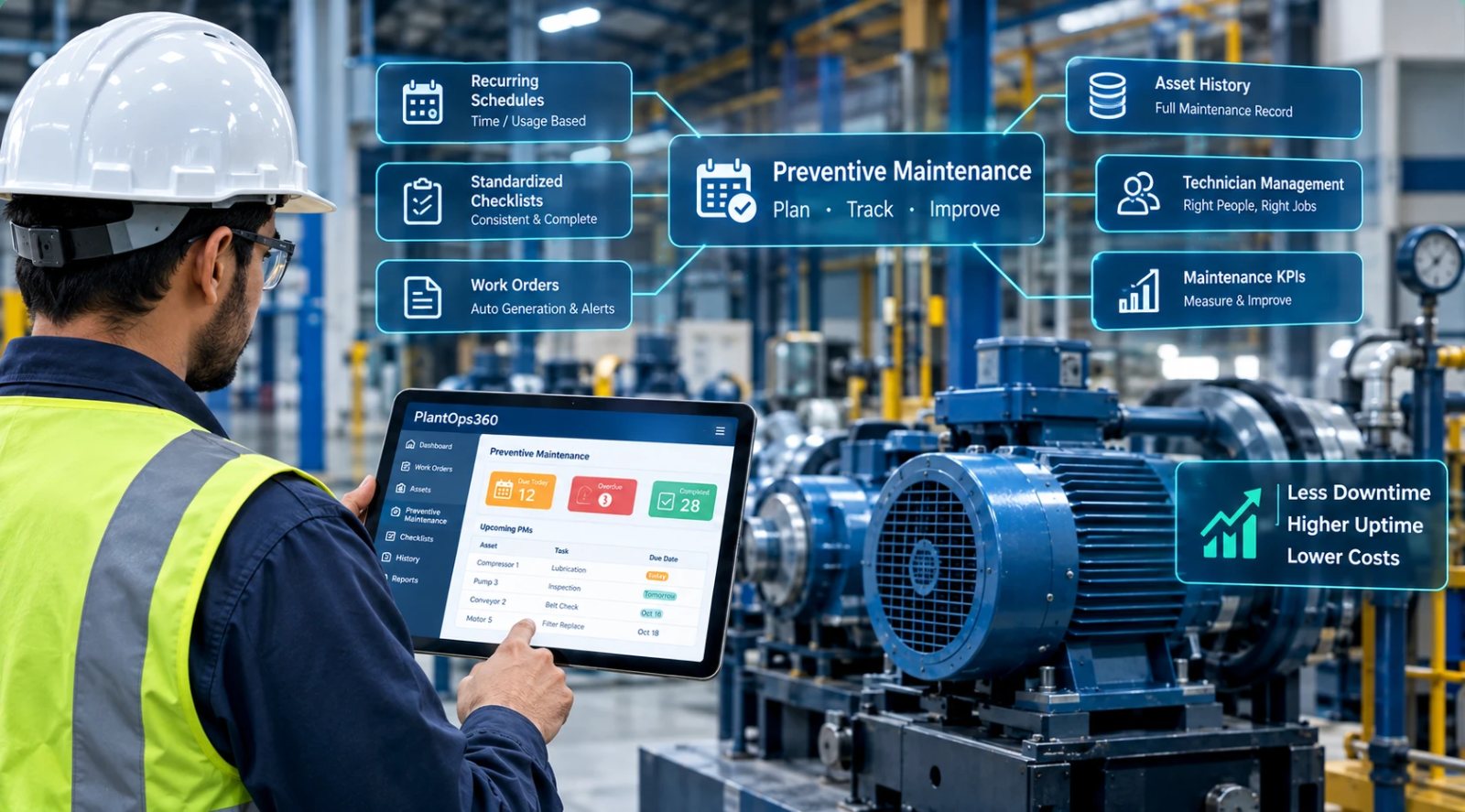
- Plan recurring maintenance
- Generate work orders automatically
- Use a standard preventive maintenance checklist
- Track overdue and completed jobs
- Review equipment history
- Assign technicians
- Monitor maintenance KPIs
This makes it easier to understand what needs attention today, what is coming next, and where maintenance delays are building up.
When Should a Plant Move From Spreadsheets to Maintenance Software?
Moving to software may make sense when jobs are frequently missed, maintenance history is difficult to find, different teams use separate files, or managers lack visibility across machines or locations.
At that stage, a dedicated maintenance system provides a more scalable way to manage maintenance activities.
It also reduces dependence on individual memory and makes important maintenance information easier for the whole team to access.
Frequently Asked Questions
Can preventive maintenance software work for multiple plants?
Yes. Many maintenance systems can organise assets, work orders, and schedules by plant or location.
This gives management a central view while allowing individual plant teams to manage their own maintenance work.
Should every asset have the same preventive maintenance checklist?
No. The checklist should match the equipment, risk level, and maintenance requirement.
A compressor, conveyor, motor, and pump will usually need different inspection points and maintenance steps.
How do you know if a preventive maintenance schedule is too frequent?
Review maintenance history, part condition, failures, and technician findings.
If components are regularly replaced while still in good condition, the interval may need adjustment. A good schedule should be based on actual equipment performance.
Can software completely prevent equipment breakdowns?
No. Even a strong preventive maintenance program cannot eliminate every failure.
However, better scheduling, consistent inspections, and accurate maintenance history can reduce avoidable breakdowns and improve response when problems occur.
Conclusion
Preventive maintenance becomes difficult when plants rely on manual tracking, inconsistent checklists, scattered records, and reactive follow-up.
A clear preventive maintenance schedule, standard processes, and better asset history can make daily maintenance much easier to manage.
Industrial preventive maintenance software brings these activities together so plant managers can plan work, track completion, and make decisions using real maintenance data.
PlantOps360 helps maintenance teams move from scattered maintenance tracking toward a more structured and proactive approach. Explore PlantOps360 to see how better maintenance planning can support equipment reliability and plant uptime.