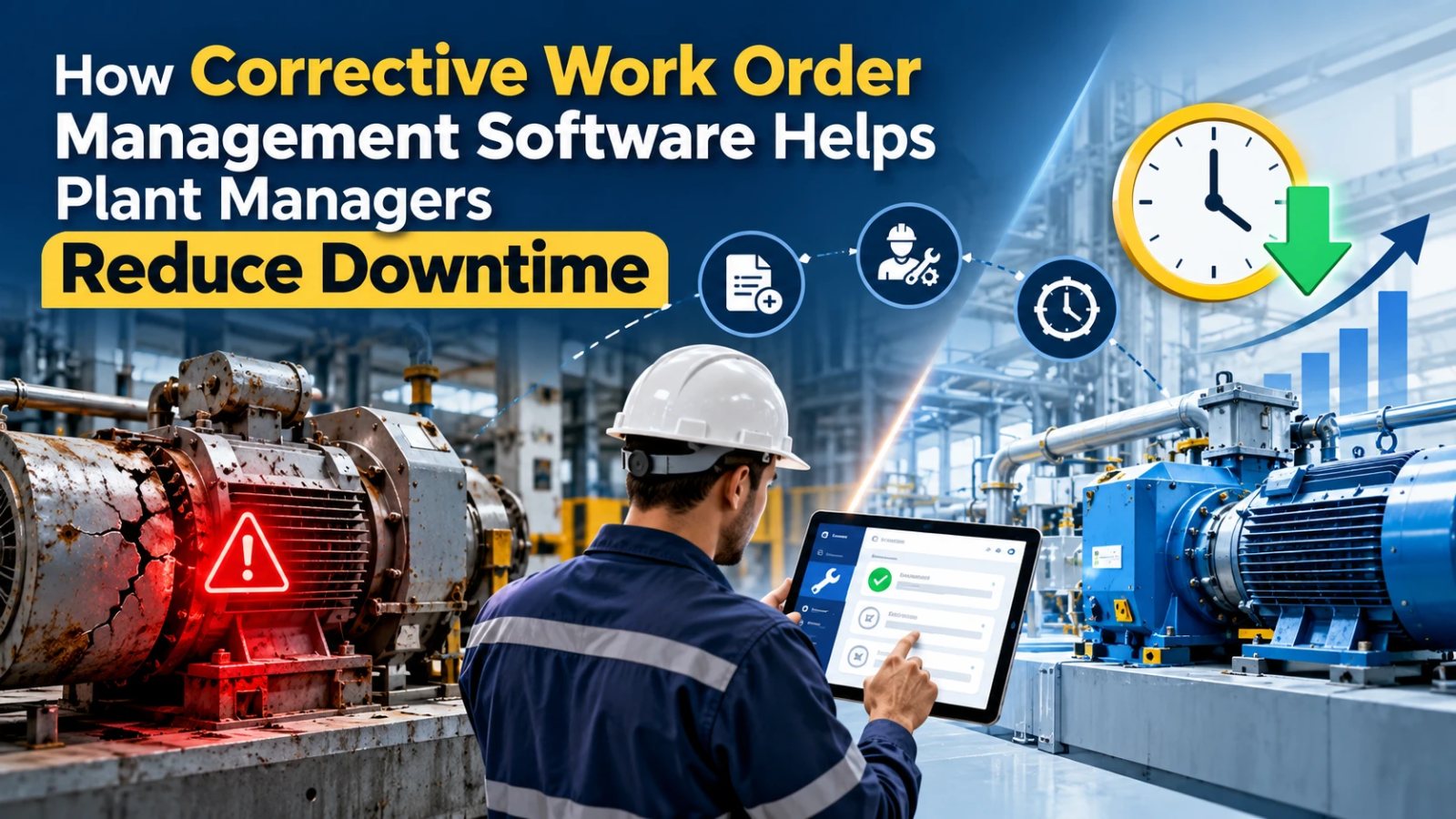
Every plant wants two things from its equipment: reliable performance and a longer working life.
But achieving both can be difficult when maintenance records are scattered, tasks are missed, spare parts are unavailable, or teams spend most of their time reacting to breakdowns.
EAM software helps solve this by bringing asset information, maintenance schedules, work orders, spare parts, and performance history into one system.
For plant managers looking at how to reduce equipment downtime, better asset management is often one of the most practical places to start.
What Is EAM?
EAM stands for Enterprise Asset Management.
EAM software helps organisations manage physical assets throughout their complete life cycle, from installation and daily use to maintenance, repair, and eventual replacement.
Unlike a simple maintenance tracker, an EAM system provides a broader view of each asset.
It can include:
- Asset details and location
- Maintenance schedules
- Work orders
- Breakdown history
- Spare parts usage
- Technician records
- Inspection information
- Equipment costs
- Performance data
This gives plant teams a clearer picture of asset condition and maintenance activity.
How EAM Helps Extend Asset Life
Equipment usually does not fail suddenly without warning. Small problems often build over time.
Missed lubrication, delayed inspections, overheating, vibration, worn parts, or repeated overloading can slowly reduce asset life.
Keeps Maintenance on Schedule
One of the simplest ways to improve equipment life is to perform maintenance at the right time.
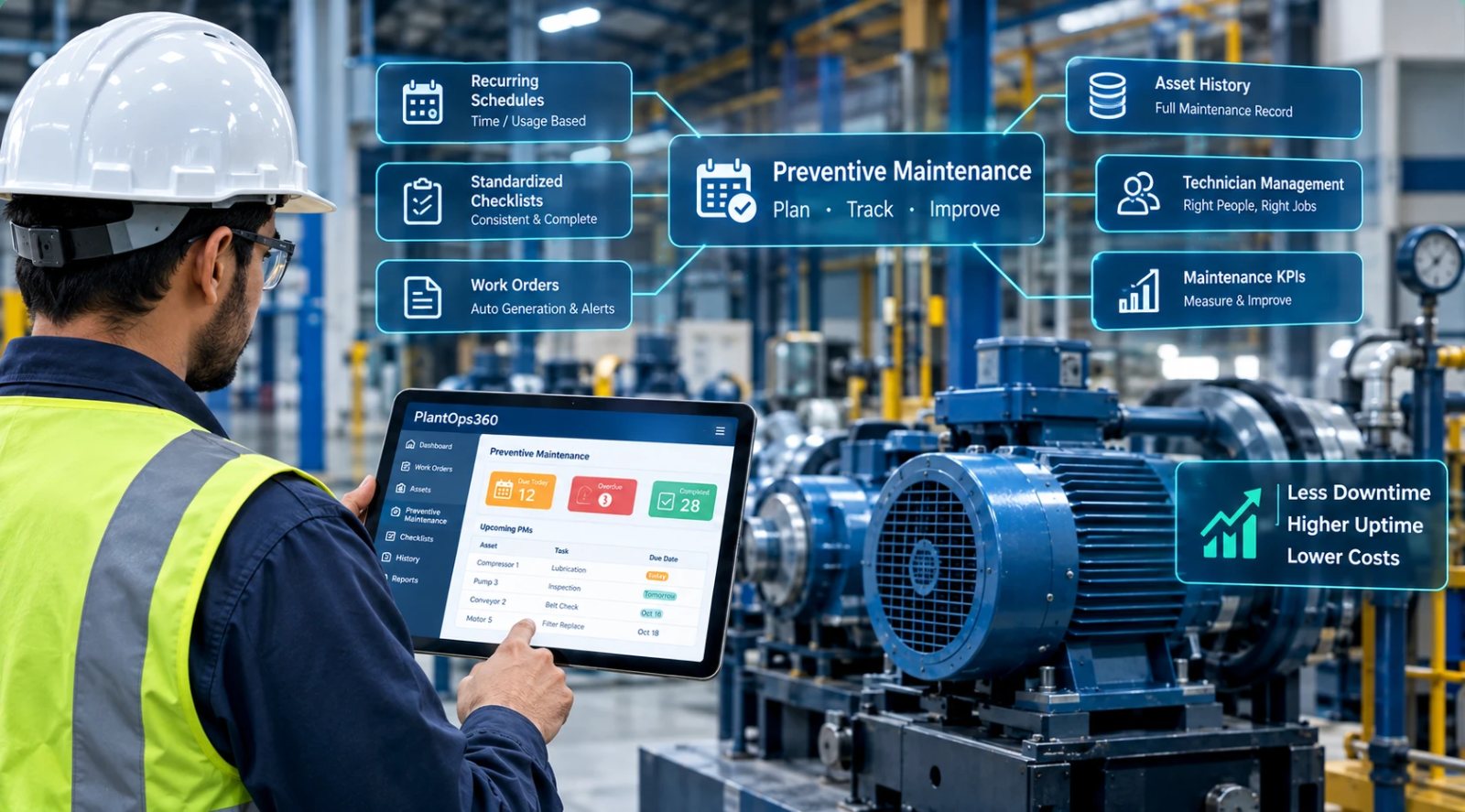
An EAM system helps teams create recurring preventive maintenance tasks and monitor overdue work.
Instead of depending on spreadsheets or memory, plant managers can see what is due and which assets need attention.
This reduces the risk of small maintenance issues becoming expensive failures.
Builds a Complete Asset History
When technicians can see previous repairs, inspections, and failures, they can make better decisions.
For example, if the same bearing has failed several times, replacing it again may not solve the real issue.
Asset history can help teams investigate the root cause and take more effective action.
Over time, this can reduce repeated damage and improve equipment reliability.
How to Reduce Equipment Downtime With EAM
Reducing downtime does not mean eliminating every breakdown. That is rarely realistic.
The goal is to prevent avoidable failures and respond faster when something does go wrong.
Identify Repeated Equipment Problems
An EAM system keeps maintenance and failure information linked to each asset.
This makes it easier to identify machines that:
- Break down frequently
- Require repeated repairs
- Generate high maintenance costs
- Have recurring component failures
- Create long production stoppages
Plant managers can then focus improvement efforts where they matter most.
Improve Work Order Planning
A major cause of downtime is poor coordination.
A machine may be ready for repair, but the technician, spare part, tool, or instruction is not available.
EAM software helps organise work orders with clearer task details, priorities, responsibilities, and maintenance history.
Better preparation can shorten repair time and reduce unnecessary delays.
Plan Maintenance Around Production
Maintenance and production often compete for machine availability.
If maintenance teams know upcoming requirements early, they can coordinate work during planned shutdowns, changeovers, or lower-production periods.
This helps reduce unplanned interruptions while keeping important maintenance work on schedule.
Better Spare Parts Control Can Reduce Downtime Too
Even a small component can keep a machine offline if it is not available when needed.
EAM systems can help teams understand which spare parts are used by which assets and how often they are consumed.
This supports better inventory planning.
Plant managers can avoid two common problems:
- Holding too many unnecessary spares
- Discovering a critical part is unavailable during a breakdown
Better spare parts visibility can help shorten maintenance delays and improve equipment availability.
Why Asset Data Matters for Better Maintenance Decisions
Maintenance decisions are difficult when information is spread across notebooks, spreadsheets, emails, and individual team members.
An EAM system creates a single source of asset information.
Managers can use this data to answer practical questions such as:
- Which machines create the most downtime?
- Which assets cost the most to maintain?
- Are preventive jobs being completed on time?
- Which failures keep repeating?
- How long does equipment usually operate between failures?
- Is it better to repair or replace an ageing asset?
These insights help move maintenance from reactive decision-making toward a more planned approach.
Which Plants Can Benefit From EAM?
EAM systems are useful in industries where equipment reliability directly affects production, quality, or delivery.
This can include pharmaceutical, chemical, food processing, FMCG, plastics and polymer, packaging, automotive components, electronics, power plants, and renewable energy operations.
The specific assets may differ, but the challenge is similar: keeping critical equipment available while controlling maintenance effort and cost.
Frequently Asked Questions About EAM
Is an EAM system only useful for large factories?
No. Smaller plants can also benefit when maintenance becomes difficult to manage with spreadsheets or manual records.
The need usually depends more on asset complexity and maintenance workload than plant size.
What is the difference between EAM and CMMS software?
A CMMS mainly focuses on maintenance activities such as work orders and preventive maintenance.
EAM usually covers a wider asset life cycle, including asset performance, costs, inventory, maintenance history, and long-term asset decisions.
Can an EAM system help decide when equipment should be replaced?
Yes. Maintenance cost, breakdown frequency, age, downtime, and asset performance can help managers evaluate whether continued repair still makes financial sense.
The final decision should also consider production importance and replacement cost.
How quickly can an EAM system reduce equipment downtime?
Results depend on data quality, maintenance discipline, and how well the system is used.
Plants usually see the most value when they first focus on critical assets, overdue maintenance, repeat failures, and high-downtime equipment.
Conclusion
Longer asset life and lower downtime do not come from doing more maintenance. They come from doing the right maintenance at the right time.
EAM software helps plant teams organise maintenance schedules, work orders, spare parts, asset history, and performance information in one place.
For managers exploring how to reduce equipment downtime, this better visibility can make a real difference in day-to-day maintenance decisions.
PlantOps360 can help maintenance teams move from scattered asset records and reactive repairs toward a more structured approach to asset management and plant reliability.